Latest Updates
Who's Online

Please sign in to add comments


Cart Contents
| Item: | Price: | Qty: |
|---|---|---|
| Total: R 0.00 | ||
User Content
Latest Poll
Feature
Cyberpunk 2077 Would Be Even Better If It Were More Deus Ex And Less Assassin's Creed

Five years, a dozen major patches, and one sizeable expansion have evolved, expanded, and improved Cyberpunk 2077. After completing it this year, having bounced off it repeatedly since launch, it was not the ageing RED Engine or lingering flaws that tarnished an otherwise great RPG. Rather, it was a question I have asked myself repeatedly since the fixation on open-world games began in the late-2000s. Why, if a developer has invested so much time and money creating a branching narrative, unique set-pieces, multiple endings, and hours of high-quality optional content, would they bloat their game with low-quality intrusive busywork to its detriment?
For those who need a quick recap, Cyberpunk 2077’s December 2020 launch (after multiple delays) is remembered primarily for a severe lack of polish, functional but underwhelming Xbox Series and PlayStation 5 ports, and abysmal last-gen console ports in which tanking frame rates and hard crashes were so prevalent that even Sony pulled it from PSN and issued vanishingly rare digital refunds. Only PC gamers with suitably high-end hardware received a game that matched the marketing materials, albeit still with open-world bugs, wonky animations, and broken NPC AI (and it should come as no surprise that early reviews were given access to PC code).
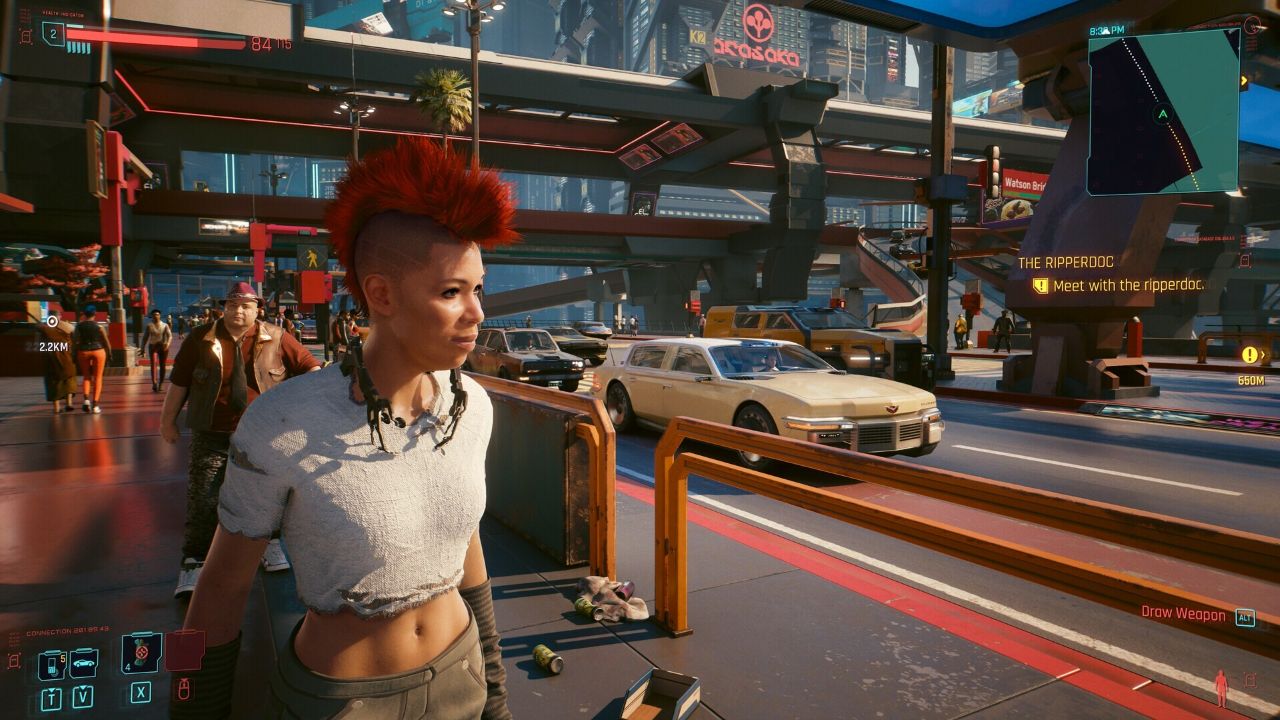
Even as someone with a bias towards high-complexity, low-polish Eurojank RPGs like ELEX and Greedfall, the core shooting, stealth, and driving mechanics felt clunky, while the game world was a technical mess, often falling apart under scrutiny with bugs constantly ruining immersion during scripted sequences and emergent gameplay. Five to six years in the video game industry may once constituted an entire console generation, but the modern release-and-patch development cycle allowed CDPR to make amends – given most consoles and PCs are forced to be perpetually online to maintain a basic level of functionality (Nintendo consoles the rare exception).
Returning in 2026 on Xbox Series X, Cyberpunk 2077, post-Phantom Liberty and end-of-life patches, is undeniably ambitious and praiseworthy despite the weird NPC behaviour and animation glitches that persist. The plot feels epic with a huge cast and numerous twists; there are both explicit and subtle player choices that trigger branching outcomes; the writing and performances are broadly excellent; the world is massive and feels both visually and culturally diverse; and there’s a decent amount of mechanical depth – think dialogue, combat, hacking, and stealth – if you avoid settling into one build (imagine Skyrim’s stealth archers as netrunners delivering malware from afar).
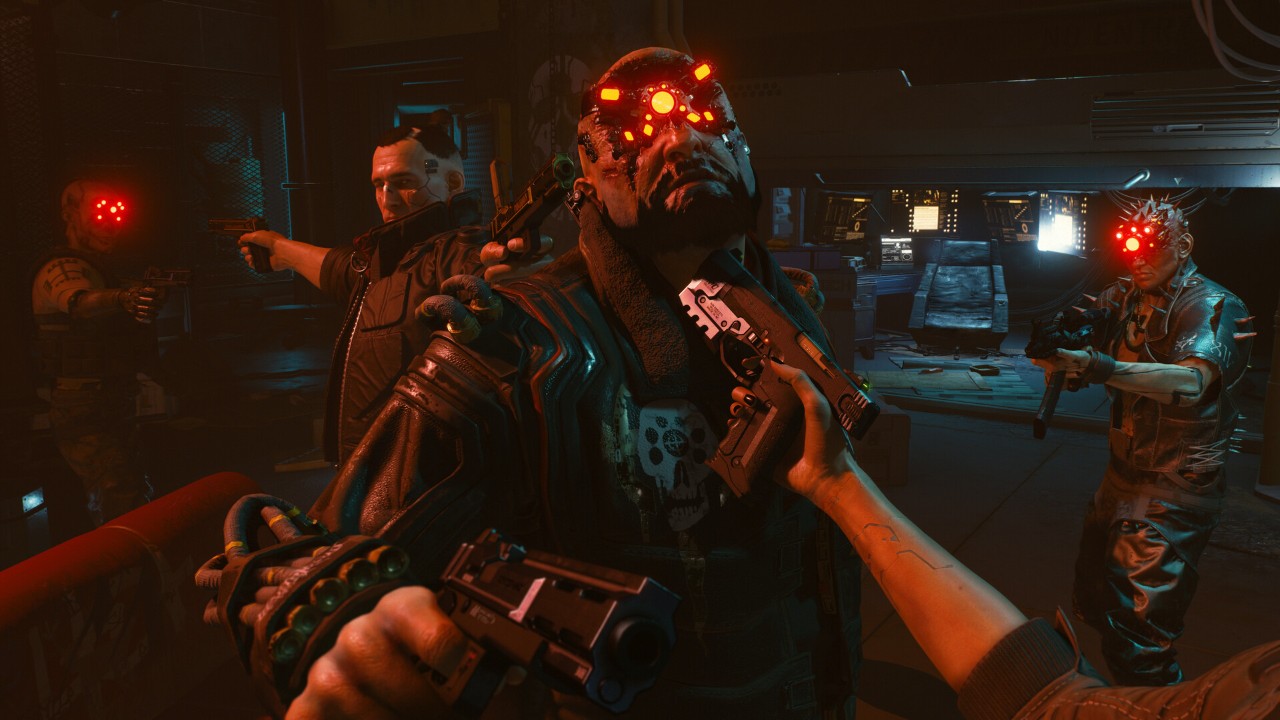
For context, what I wanted from Cyberpunk 2077 was a spiritual sequel to Deus Ex: Mankind Divided; something that seemed unlikely from Square-Enix even before Embracer’s botched acquisition spree. A dense first-person RPG full of attribute- and skill-checks; augmentation powers akin to magic; player choice with far-reaching consequences; and creative stealth or non-lethal options. In theory, Cyberpunk 2077 now ticks all those boxes. In practice, the longer I played, the more I found myself thinking instead about Assassin’s Creed; a series fond of bloating the experience to the point it affects pacing and buries quality content under a deluge of checklist tasks.
To CDPR’s credit, Cyberpunk 2077 is nowhere near as bad as its peers, but it still bombards you with short, repetitive activities during your journey through 30+ hours of quality, narratively significant missions with memorable set-pieces. On top of that, you have hours of multi-stage companion quests that can develop into romances and open new ending paths; shorter questlines that reveal the corruption and rot riddling Night City; and quirky one-off side jobs that introduce the locals in a humorous or tragic context. Even ignoring the busywork, there were times in the second act that my “V” could never take a break from their investigation and endless commitments.
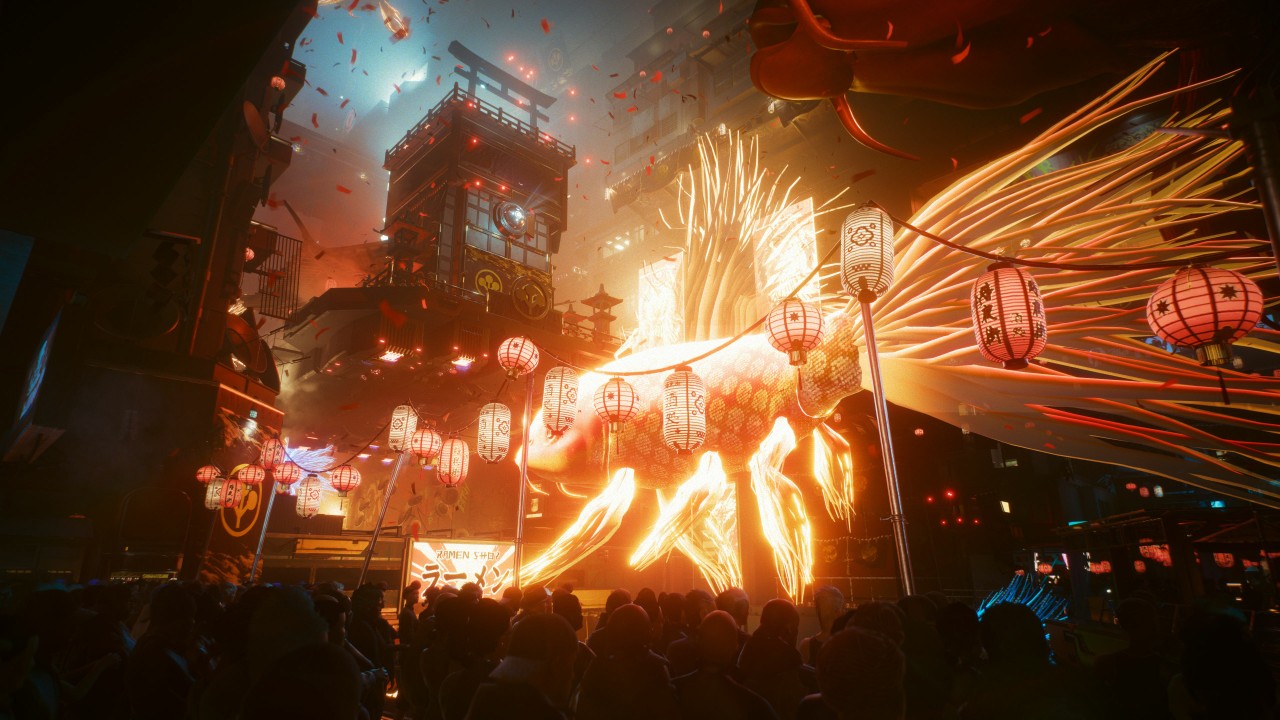
Most developers would love to have the problem of overwhelming players with multiple compelling questlines, so I don’t understand why CDPR decided to pile on menial tasks? Fixers automatically call about gigs the moment you get close to map icons; gangs commit crimes on literally every city block; and cyberpsycho attacks kill so many citizens and police it’s hard to believe Night City could sustain a functional population. Sure, these activities create opportunities for emergent gameplay, and it makes sense role-playing a mercenary, but they also function as distractions that, if engaged with, ensure location and encounter design feels repetitive long before the end-game.
There are gameplay balance implications too. By the middle of the second act – having tackled 20% of fixer gigs and cyberpsycho encounters before ditching them – I’d maxed out two attributes, reached maximum street cred, and broken the gear economy. I was heavily armoured and exceedingly (non)lethal as I could reliably loot Tier 5 cyberware and firearms (or simply sell the ones I did not want for thousands of Eddies to buy those I did). Now I enjoy a power fantasy just as much as a consistent challenge, but anyone who falls into the trap of systematic icon-clearing in Cyberpunk 2077 risks trivialising the experience no matter the difficulty setting.
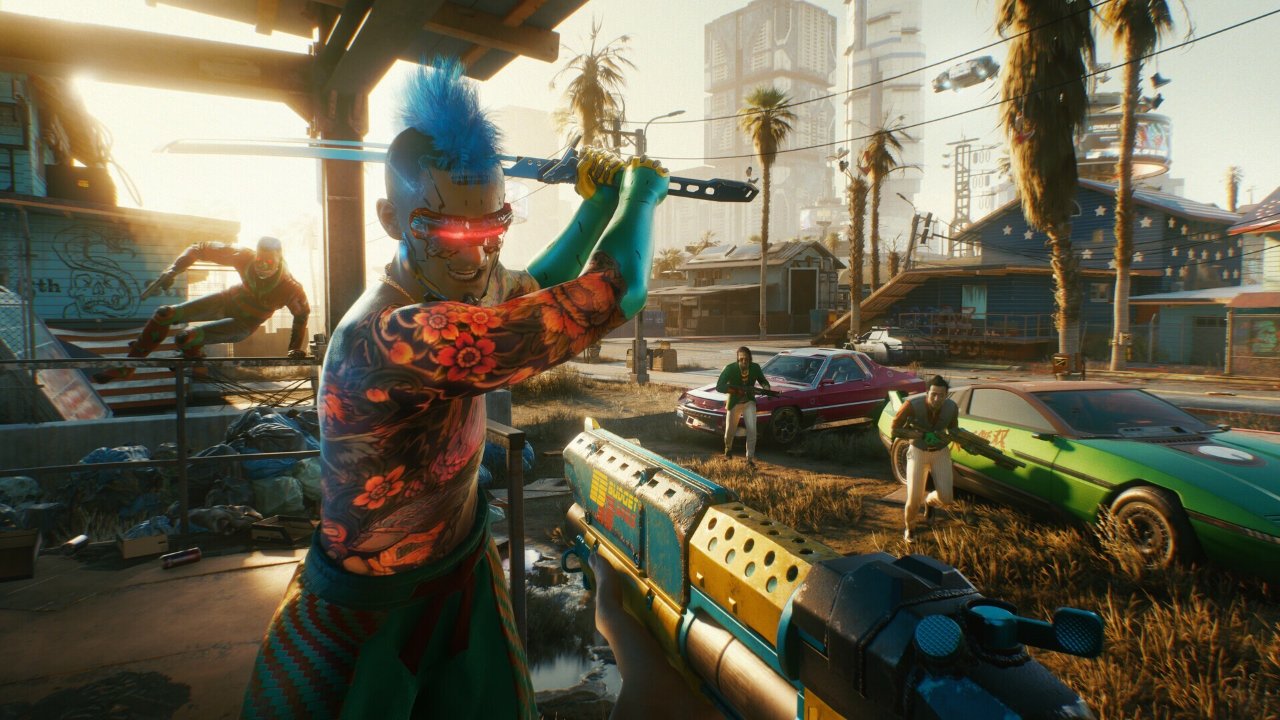
Other casualties of bloat include narrative pacing, visual polish, and the iconic Keanu Reeves as Johnny Silverhand. It makes little sense that V would tackle work unrelated to the plot after Act 1 given the urgency of their situation; endless NCPD callouts often take you to parts of the map that have seen less polish than others; and this padding drags out the time between core missions in which Johnny is a prominent figure. He’s a perfect fit for modern culture – a narcissist who conflates beliefs with self-interest – but I often forgot he was a presence in V’s brain as he has minimal presence during gigs and it’s easy to miss his contextual interactions outside scripted events.
A common counterargument would be that optional busywork is, by definition, optional. However, that is rarely the case and there is a good reason I used the word “intrusive” in the opening paragraph. When you’re spammed with holo-calls or text messages as you drive past locations, have to sift for specific quest details in a cumbersome list, or struggle to place a navigation marker on a map region packed with icons, that “optional” content is difficult to ignore. There were times I had overlapping calls and text message interrupt dialogue and my mind drifted back to GTA IV’s infamous “Niko, do you want to go bowling?” calls the player received relentlessly between missions.
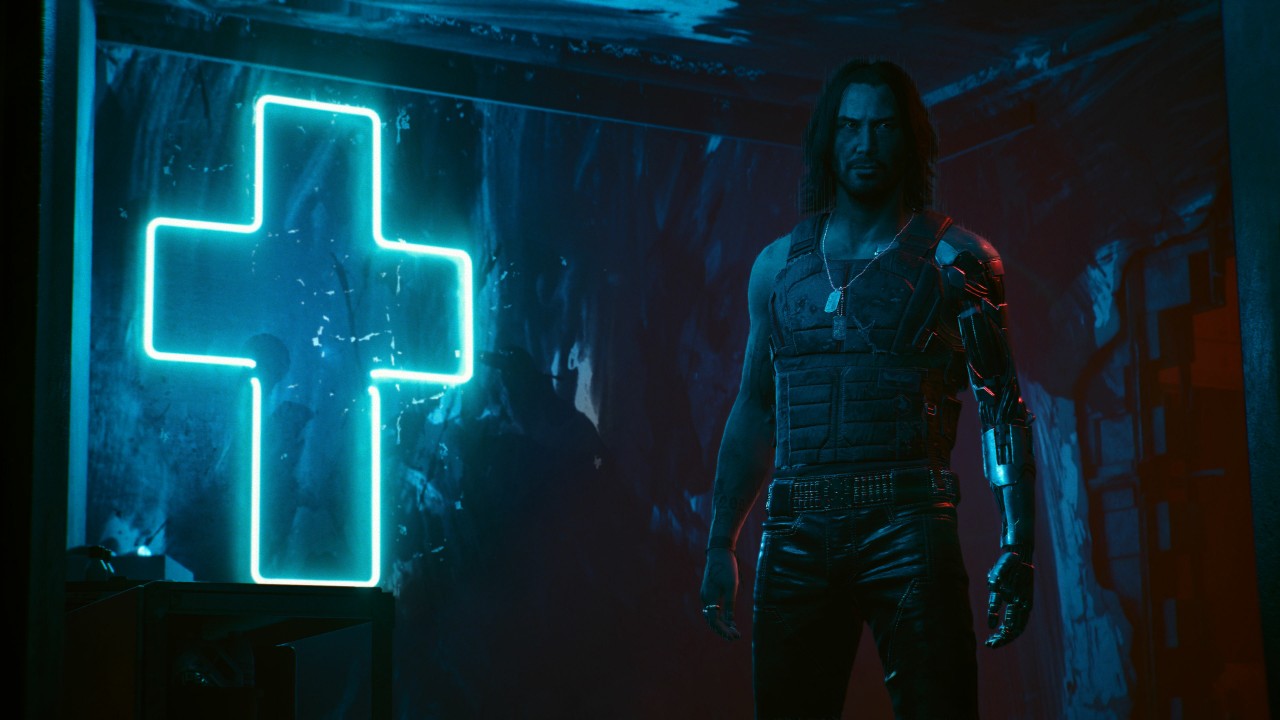
All of which loops back to my initial question: why do developers bloat their games and risk diluting the quality of the experience? An equally important follow-up question might be: who is it for? Steam achievements, Xbox achievements, and PlayStation trophies for Cyberpunk 2077 suggest only 10-20% of players have reached an ending. Multiplying those percentages by the number of endings to reach a 50-60% completion rate is not accurate as you can look at the drop off in completion percentages for prior achievements or trophies, suggesting most of those are the same 10-20% of players replaying the game (or reloading a save) to trigger a different ending.
No doubt CDPR is proud of their success, with ever-increasing sales and post-launch acclaim reflecting their initial ambition and continued efforts, but surely RPG developers want the majority of players to complete their game and discover the repercussions of their actions and decisions? With so much high-quality, narratively significant content on offer, why would you bloat the experience and push away most players before the end? For vocal fans, surely there’s already enough player choice, branching outcomes, and diverse player builds to keep them re-playing without negatively impacting the experience of those trying to get through it once? I’m still confused.

There are 2 comments
 Lurch
Lurch

Please login to post comments.
More Features
Comic Con Africa 2026 International Guests Roundup
With Comic Con Africa 2026 only a week away, the excitement and hype is slowly building towards the ...
15-09-26 Read more
BlizzCon 2026: All the Biggest Announcements
After taking a three-year break, BlizzCon has finally returned, and Blizzard had plenty to announce...
14-09-26 Read more

Cyberpunk 2077 Would Be Even Better If It Were More Deus Ex And Less Assassin's Creed
Five years, a dozen major patches, and one sizeable expansion have evolved, expanded, and improved Cyberpunk...
07-09-26 Read more

Mrs South Africa Finalist Shoma Govender Launches Game Over Cancer Fundraiser
For Mrs South Africa finalist, Shoma Govender, the journey towards the crown has become about far more...
05-09-26 Read more
Five Best Announcements From Gamescom Opening Night Live 2026
Gamescom Opening Night Live 2026 has passed, delivering yet another stacked show filled to the brim ...
26-08-26 Read more
The Witcher 3 Remastered Stole The Show at Gamescom – Here’s What to Expect
While we knew CD Projekt Red was going to debut its Songs of the Past expansion pack for The Witcher...
26-08-26 Read more
Here's How Long it Will Take to Watch These Modern Anime
We've recently been exploring how long it would take you to watch certain anime, if your'e curious about...
21-08-26 Read more
GTA: Vice City Revisited - What Made It So Good?
2002’s Grand Theft Auto: Vice City holds nothing but pleasant memories for both myself and the many ...
20-08-26 Read more

11 Unforgettable Missions From Grand Theft Auto: Vice City
We’ve still got a ways to go before we all collectively make our (extremely) long-awaited return to ...
11-08-26 Read more

Five Hidden Anime Gems You Can Watch on Prime Video South Africa
While Crunchyroll remains the biggest legitimate streaming giant, Netflix and Amazon are slowly adding...
05-08-26 Read more

Overview
Platform
PlayStation 4, Xbox One, PlayStation 5, Xbox Series
Release date
0000